



Porous Activated Carbon: The Unsung Champion of Solid-State Batteries
Jun 17, 2026
Leave a message
In the material system of solid-state batteries, anode materials undertake the core responsibilities of energy storage and release for lithium-ion batteries, exerting a vital impact on enhancing the overall performance of lithium batteries. Nevertheless, conventional graphite anodes can no longer meet the growing demand for high energy density in solid-state batteries. Accordingly, silicon-based materials with higher theoretical energy density have become a key breakthrough to break the energy density bottleneck of batteries.
Despite the remarkable advantages of silicon-based anodes in specific capacity, they still face prominent limitations in practical applications. Silicon undergoes a volume expansion of up to 300% during charging and discharging. This phenomenon not only causes pulverization of silicon particles and their detachment from current collectors, but also triggers continuous reactions between silicon and electrolytes, generating unstable and progressively thickening Solid Electrolyte Interphase (SEI) films. Ultimately, the cycle life of batteries declines sharply, which has become a major bottleneck restricting the large-scale application of silicon-based anodes.
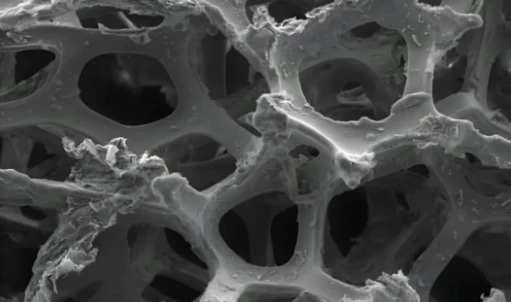
The emergence of porous activated carbon provides an effective solution to the above core challenges of silicon-based anodes. Through multiple synergistic effects, porous activated carbon fundamentally addresses the application bottlenecks of silicon-based anodes, which are reflected in the following three aspects:
- First, structural buffering and stress absorption. Featuring a three-dimensionally interconnected pore structure and excellent toughness, porous activated carbon can effectively bear and disperse the tremendous stress generated by silicon expansion during charge and discharge cycles. It inhibits the propagation of cracks on silicon particles and prevents their pulverization and detachment.
- Second, uniform deposition and expansion control. Its abundant pore volume and hierarchical pore structure provide uniform deposition sites for nano-silicon particles, which effectively alleviates the agglomeration of silicon particles. Meanwhile, the sufficient reserved expansion space drastically reduces the volume expansion rate of silicon-carbon anodes.
- Third, efficient electrical conduction and ion transport. Porous activated carbon itself possesses outstanding electrical conductivity, and its continuous carbon network builds unobstructed pathways for electron transmission.
In addition, by adjusting parameters such as pore size and specific surface area, porous activated carbon can optimize the interfacial bonding between silicon and carbon and restrain the excessive growth of SEI films, thereby further improving the cycle stability and service life of silicon-carbon anodes.
Far from being a minor auxiliary material in solid-state battery systems, porous activated carbon holds an irreplaceable core position in silicon-carbon anode systems. It serves as a critical supporting material that drives the industrialization of silicon-carbon anodes from laboratory research to commercial production and facilitates the performance leap of solid-state batteries.
At present, raw materials for porous activated carbon are mainly divided into three categories, each with distinct characteristics in terms of performance, cost and technological maturity:
- Resin-based porous activated carbon Adopting raw materials such as phenolic resin, it is currently the mainstream choice for high-end silicon-carbon anodes. It boasts high specific surface area, large pore volume and superior performance, yet it is hampered by high raw material costs and relatively low electrical conductivity.
- Biomass-based porous activated carbon Manufactured from renewable resources including starch and coconut shells, this type of porous activated carbon features abundant raw material sources and low costs. However, its specific surface area and pore structure are inferior to those of resin-based porous activated carbon.
- Pitch-based porous activated carbon Produced from coal tar pitch and petroleum pitch, it shows great potential in cost control and electrical conductivity. Nevertheless, the technology for precise pore size control remains immature and requires further technical breakthroughs.

With the continuous advancement of the industrialization of solid-state batteries, porous activated carbon, as a core material for CVD silicon-carbon anodes, will witness robust growth in market demand alongside the large-scale application of silicon-carbon anodes. It is predicted that the demand for porous activated carbon will reach 48,500 metric tons in 2030, creating a market worth over 7 billion RMB, with a compound annual growth rate of 77.36% from 2024 to 2030.
Against this backdrop, the porous activated carbon industry has entered a golden development period. Our company is the only domestic enterprise that has realized mass production of biomass-based porous activated carbon, breaking the long-term monopoly of Japan's Kuraray in this field. We adopt an integrated physical and chemical activation process, which delivers lower energy consumption compared with industry peers. Currently, our commissioned production capacity of porous activated carbon stands at 500 tons per year, while the ongoing construction project with a capacity of 2,000 tons per year is expected to be fully operational by the end of May 2026.
Should you have any inquiries about porous activated carbon, please feel free to contact us! We are ready to provide professional answers and high-quality services at any time!
Send Inquiry