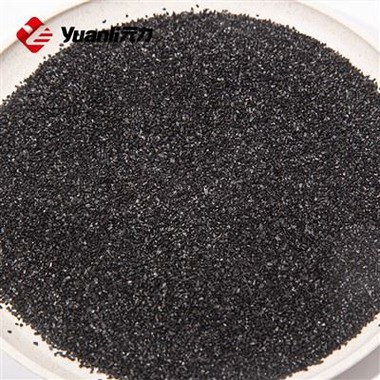
Your Professional Coconut Shell Activated Carbon Manufacturer


Fujian Yuanli Active Carbon Co., Ltd. (Stock Code: 300174) is an enterprise group contains business units of activated carbon, sodium silicate and precipitated silica. The company grows and develops based on the strategy of technology innovation and resources integration.


Why Choose US


Global Market
We are specialized in manufacturing activated carbons more than 23 years. Yuanli was founded in 1999. Up to now, Our products have been exported to more than 54 countries, such as Russia, Australia, USA, UK, Germany, Iran, South Korea, Thailand, Indonesia, Mexico, Brazil, Chile, Spain, Japan, etc. We have agents in the Singapore, Thailand, Italy, etc, so we can provide best service to our clients.


Rich Experience
5-10% of the sales revenue has been invested into the technology innovation in the past 14 years.More than 200 technical talents and 67 proprietary technologies;National key laboratory and activated carbon R&D center;D-grade dust-free workshop for pharmaceutical applications;Yuanli'stechnical center is capable of analyzing and testing activated carbon products on the basis ofGB/T,ASTM, JIS,JECFAand other test methods.


Professional Team
We have a professional team with technical knowledge and managerial experience. Our professional R&D and QC team can strictly control the product quality to meet customers requirement.


One-stop service
We have an advanced technical team to provide customers quick and warm service across the whole process.


First 12 Last
Types of Coconut Shell Activated Carbon


Coconut Shell Carbon Filter
Cigarette smoke contains numerous substances that can irritate and possibly damage living beings. Standard filters are not efficient at eliminating these substances, but Activated Carbons can effectively and selectively trap them.


Coconut Shell Steam Activated Carbon
Cigarette smoke includes various compounds that can irritate and potentially harm living organisms. While standard filters do not effectively remove these compounds, Activated Carbons can successfully and selectively capture them.


Coconut Shell Activated Carbon for Water Treatment
Activated carbon is essential for both residential and municipal water treatment, as it removes contaminants and guarantees high water quality in households. When used in filters or pitcher systems, it also improves the taste of drinking water.


Coconut Shell Activated Carbon Filter Media
HA series is granular activated carbon product using coconut as raw material which can be used for Coconut Shell Activated Carbon Filter Media. It has characteristics of advanced pore structure, high hardness, high purity, which guarantee its performance in water purification, liquid phase decolorization, precious metal extraction, catalyst carrier, solvent recovery, air purification, etc. We can customize the product for our customers.


Acid Washed Activated Carbon
Acid activated carbon, using selected coconut shell raw materials, through activation, crushing and screening, fine washing dust removal and pickling more than ten processes refined.


Solvent Recovery Activated Carbon
Yuanli HA series activated carbon product can also be used for solvent recovery. The shape is amorphous particles, with high mechanical strength, developed pore structure, large specific surface area, fast adsorption speed, high adsorption capacity, easy to regenerate, durable and other characteristics of environmental protection activated carbon.


Advantages of Coconut Shell Activated Carbon
Coconut Shell Carbon Filter
 

It Has More Micro-pores

Coconut shell has emerged as one of the best forms of activated carbon for water filtration needs. Compared to the other types of activated carbon, the coconut shell charcoal has more surface area and higher density of micro-pores. It has higher porosity than most of the popular activated carbons. It even has 50% more micro-pores than the coal based activated carbon. Which is why it is considered as one of the best materials for water filtration as it can adsorb volatile organic chemicals, and other contaminants that are hard to remove.

Coconut Shell Activated Carbon Water Filter
 

It Doesn't Leave a Taste

Although its harmless, some charcoal leave an ashy taste in the water. This is not the case with coconut shell activated carbon. It is more friendly, effective and non-leaching agent that offers better quality water purification results than others. manufacturing activated carbon with coconut shell is easier and less time taking. Plus, it is available throughout the year and it doesn't have any effect on the environment. Trees don't need to be cut to get the coconut shells. The availability of the raw material is abundant.

Coconut Shell Steam Activated Carbon
 

Effective Filtering Method

Due to its high density of micropores, the coconut shell carbon is one of the most effective methods for filtration. It can adsorb a huge number of contaminants from the water and purify it for better use. Industries are now relying on alternate source of carbon for their water purification needs. They have responsibilities of being a energy-efficient and environmentally friendly industry. The coconut shell activated carbon can help industries meet their goals of sustainability.

Coconut Shell Catalyst Activated Carbon
 

They are Long-Lasting

One of the things that make activated carbon made from coconut shell so great is that they are long-lasting. The high micro-porosity gives it a greater machinal strength, which makes it harder and highly resistant to wear and tear. This is one of the reasons why they are considered as a cost-effective option. They can last long and not wear so easily. They can effectively remove a wide range of contaminants without getting damaged easily.

Coconut Shell Activated Carbon For Gold Extracting
 

More Purity of Water

If you compare the water purity of different types of activated carbon then the coconut shell offers the purest water after filtrations. This ability comes from the fact that it has more micropores. Which means it can attract a wide range contaminant from small to large. It can adsorb a huge amount and variety of contaminants including organic chemicals and gases. Lack of leaching too makes it an effective method of water purification.


Specification


Ctc

50-60%

Moisture

3-5%

Ash

3-5%

PH

8-10

Active Carbon Material

Shell Activated Carbon

Carbon Content

High-Carbon

Pore Diameter

Microporous

Manufacturing Method

Physical Method of Activated Carbon

Appearance

Granular

Usage

Environmental Protection Industry, Chemical Industry, Food Industry, Electric Power Industry, Petrochemical Industry, Gold Industry

Physical Properties

Specific Surface Area

Chemical Properties

Ph Value

Adsorption Properties

Carbon Tetrachloride Adsorption Value

Type

Gold Recovery

Transport Package

25kg/Bag, 500kg/Bag or Customized Bag

Specification

6*12mesh, 4*8mesh, 5*10mesh


Coconut Shell Activated Carbon Manufacturing Process
 

Step1: Preparation of raw materials
Firstly, we do a selection of the coconut shell. There are two main sources of raw materials for coconut shell activated carbon on the market, one is Hainan coconut shell and the other is Indonesian coconut shell. Hainan coconut shells are thin and not very dense, while Indonesian coconut shells are thicker and denser. In contrast, the quality of activated carbon processed from Indonesian coconut shells will be better. After the selection of raw materials, pre-treat coconut shell through some sections such as drying, crushing and screening before going to next step.


Step2: carbonization
Secondly, one of the key processes -carbonization process begins. Put the screened coconut shells into the carbonization equipment, dry the raw materials at a temperature of 170-600 °C, and carbonize 80% of the organic tissue in the same amount. After burning to a certain extent at high temperature, the charcoal kiln is closed to allow air to enter, and then the residual heat continues to heat and dry distillation, so that the moisture and wood tar in the coconut shell are leached out, and the coconut shell activated carbon is formed. 


Step3: activation
Thirdly, put carbonized coconut shell into activated rotary kiln, Oxygen-containing gases as water vapor and flue gas (mainly CO2) are used as activators, and activated by redox reaction in contact with carbon at high temperature. The main operating conditions of the activation process include activation temperature, activation time, flow rate and temperature of the activator, feeding speed, oxygen content in the activation furnace, and etc.


Step4: Grinding and screening
Fourthly, after activation, the finished coconut shell activated carbon is made. Sometimes, the client may have a specific requirement in size, and then we need to send coconut shell activated carbon to the grinding mill (Raymond mill). The finished activated carbon is screened according to the customer's particle size requirements. The common coconut shell activated carbon particle sizes are 6-12 mesh, 8-16 mesh, 10-24 mesh, 20-40 mesh, 200 meshes, 325 meshes, and so on.


Step5: Pickling, washing and drying
This is an optional step for coconut shell activated carbon production, according to the technical requirement, part of the finished activated carbon needs pickling to remove impurities. 5% hydrochloric acid can be used as pickling agent in a dedicated pickling tank. After heating and boiling. Then drain the spent acid. The washing process is used for removal of acid of materials, PH value is generally controlled to 5-7. Washed materials must be dried until the moister content reaches 10%(or the value is decided by clients.)


Step6: Packing
Finally, the packaging specification of coconut shell activated carbon is generally 25kg/bag or ton bag, and the packaging bag adopts double-layer woven bag, which is strong and has moisture-proof function.


Practical Uses Of Coconut Shell Activated Charcoal


Precious Metal Recovery
Due to its high wear resistance and excellent chemical and physical properties, coconut shell charcoal is essential for applications such as the recovery of gold and other precious metals.
It serves as an adsorbent in metal smelting and extraction processes, assisting in the removal of metal ions.


Drinking Water
Coconut shell activated carbon is widely used in water treatment to eliminate color, odors, taste, organic compounds, heavy metals, and other pollutants in drinking water.
With its pore structure predominantly composed of micropores (over 80%), coconut based activated carbon efficiently adsorbs impurities with a microporous molecular structure.


Removal of Organic Impurities in the Food and Beverage Industry
Coconut shell activated carbon is employed as a decolorizing agent in the food and beverage industry to remove color, odors, and undesirable tastes.

Catalyst Support

Due to its superior chemical and physical characteristics, coconut shell charcoal, as a solid material with high surface area and chemical stability, is commonly used as a support for catalysts.

Medical Devices

In the field of medical devices, the high adsorption capacity of coconut shell charcoal is utilized to adsorb toxins, alleviating symptoms.

Wastewater Treatment

Coconut shell charcoal finds extensive use in wastewater treatment, primarily through adsorption and physicochemical processes to remove organic matters, heavy metals, decolorization, deodorization, pH adjustment, and microbial inhibition.


How to Customize Coconut Shell Activated Carbon

We can provide customization service according clients' real working condition and requirements.


ITEM

Parameter

ITEM

Parameter

Materials

Flue gas temperature at the inlet

Induced draft fan

Power: 40KW, air volume of 35000 ㎡/h, wind pressure: 2590MP

Raw materials

Moisture <15%, particle size:1-20cm, ash content<3%

Feed way

Hoist or screw feeder

Finished carbonized material

Moisture <1%, ash content<5%, volatile component:15-18%, particle size:1-10cm, iodine sorption value: 120-200mg/g

Carbonization conditions

Oxygen-poor carbonization

Gas composition

Water, carbon dioxide, and carbohydrates

Out-feeding temperature

350-400℃

Dusting method

Cyclone collector, bag filter, spray device

Temperature behind the cooler

<50℃

Cooling method

Converter natural cooling tube, external cooling water bath Converter

Power

<100kw

Equipment material

Q345

Quantity of steam

1.5-3t/h

Refractory materials

Steel fiber reinforced castable, high alumina refractory brick

Steam pressure

5kg

Insulation thickness

>40cm

Steam flow

1.6-2.3t/h

Aluminum content of resistant material

>45%

Flue gas temperature at inlet

600-800℃

Maximum temperature of resistant Material

>1300℃

Furnace temperature

<660℃

Gas amount

15,000 m3/h

Flue gas incinerator Temperature

800-960℃

Temperature sensing thermocouple

Unit:6, Heat-resistant: 1200℃


Packaging & Shipping


12.5kg,25kg,500kg plastic woven bag.
12.5kg,25kg,kraft bag.
10mt in a 20 fcl,
20mt or 22mt in a 40 fcl. iron drum, fiber drum,corrugated-board carton, soluble bag or at client's option and according to client's requirement.


Other Services


Minimum order accepted

Many other Designs for you to choose and we can Accept minimum order. Your interests can be fully Guaranteed.


Shipping Information

After you make order, we will Follow up the whole process and Update it to you. Collecting goods, Loading containers and Tracking goods transport information for you.


Customized

Any of our products you are interested, or any customized orders you wish to place, any items you want to buy, Please let us know your requirements. Our team will do our best to Help you.


Certifications


productcate-1-1

productcate-1-1


FAQ


Q: What is coconut shell based activated charcoal?

A: Coconut shell based activated carbon is made of high-quality coconut shells and refined through a series of production processes. coconut shell based activated carbon is black in appearance and has two types granular and columnar. It has the advantages of developed pores, good adsorption performance, high strength, easy regeneration, economics, and durability.

Q: What are the uses of coconut activated carbon?

A: Coconut shell based activated carbon is widely used in metallurgy, chemical industry, petroleum, electric power, food, drinking water, pure water, beverage, industrial water deep purification, and precious metal refining liquor to reduce the degree of turbidity, and zeolite, a molecular sieve with a better effect, is well received by users.

Q: How do you carbonize coconut shells?

A: This process of turning coconut shell into charcoal is also called charring or pyrolysis. Essentially, the coconut shells need to be subjected to very high temperatures (between 300 and 500 degrees Celsius) for several hours in order to break down into charcoal. The vessel in which this process happens may vary.

Q: What are the characterization of coconut shell activated carbon?

A: The characteristics of the activated carbon were evaluated in terms of iodine number, density, water content and ash content. It could be concluded that the combination of 3M H PO concentration and 9 hours immersion time was the best combination for producing desirable activated carbon from coconut shell.

Q: Is coconut shell charcoal better than activated charcoal?

A: Coconut charcoal isn't the same as activated charcoal because it hasn't gone through activation. For coconut charcoal to become activated, it needs to be soaked with chemicals like phosphoric acid, or a steam method needs to be applied.

Nanping Yuanli Active Carbon Company is well-known as one of the leading coconut shell activated carbon manufacturers and suppliers in China. If you're going to wholesale high quality coconut shell activated carbon, welcome to get free sample from our factory. Also, customized service is available.

Coconut Shell Activated Carbon for Gold Extracting, Coconut Shell Activated Carbon for Gas Purification, Solvent Recovery Activated Carbon

Send Inquiry