



Activated Carbon for Water Treatment: Three Key Points You Need to Know
Jun 08, 2026
Leave a message
The adsorption capacity of activated carbon is closely related to water quality. In practical engineering applications, the performance of the same type of activated carbon may vary under different water sources and operating conditions, which is particularly evident in the application of Activated carbon for wastewater treatment where water composition complexity often introduces greater variability in treatment outcomes.
I. Water Temperature and pH: Core Environmental Factors Affecting Adsorption Efficiency
The treatment performance of activated carbon is significantly influenced by water temperature, pH and other water quality parameters.
-
Water Temperature
A rise in water temperature generally accelerates molecular mass transfer and diffusion rates. However, since adsorption is an exothermic process, increasing temperature may disrupt the adsorption-desorption equilibrium and cause desorption of some adsorbed substances. Accordingly, the overall effect of temperature rise varies across different water systems - it may improve, maintain or reduce the adsorption performance, which shall be determined based on specific water quality conditions, especially for systems using Activated carbon for wastewater treatment that often handle highly variable influent streams.
-
pH Value
Acidity and alkalinity alter the dissociation state (molecular or ionic state) of organic pollutants as well as the surface charge characteristics of activated carbon. Generally speaking, activated carbon achieves better adsorption performance for non-polar organic matter in molecular state. Therefore, maintaining a stable pH of inlet water is an essential prerequisite for consistent treatment results.
II. Particle Size: Balance Between Adsorption Rate and Operational Resistance
The particle size of activated carbon directly determines its application methods and treatment effects.
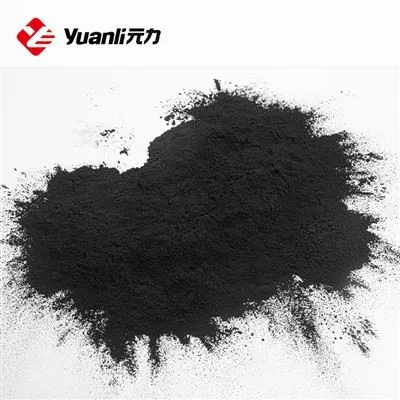
With an extremely small particle size and large specific surface area, powdered activated carbon delivers the fastest adsorption rate. It is suitable for emergency dosing and short-term rapid adsorption (e.g., removal of seasonal odor and taste). It is typically discarded after single use.
Featuring a moderate particle size, granular activated carbon can be easily loaded into fixed beds with stable hydraulic conditions and convenient replacement. It is the preferred material for continuous-flow filtration facilities such as carbon filters and carbon adsorption tanks, where Granular activated carbon water filtration plays a central role in removing both organic and inorganic contaminants over extended periods. Smaller particle size brings a faster adsorption rate yet higher water flow resistance. A reasonable balance between the two shall be achieved during system design, and proper sizing is especially critical to ensure stable and efficient Granular activated carbon water filtration without excessive pressure drop.

III. Long-term Operation: Intervention and Management of Biological Effects
In granular activated carbon (especially Biological Activated Carbon, BAC) filters for drinking water treatment, microorganisms will naturally attach to the carbon surface and form biofilms as operation continues, which is a common and normal phenomenon in engineering practice. The synergistic biodegradation of biofilms can remove part of organic matter and extend the service life of activated carbon.
The focus of engineering management is not to completely inhibit biofilm formation. Instead, stable and efficient system operation and safe effluent quality can be guaranteed by controlling influent water quality via pre-treatment processes, standardizing backwashing operations and conducting continuous effluent quality monitoring.
IV. Core Principles for Product Selection: Clarify Objectives and Match Working Conditions
Three major aspects shall be clarified for proper activated carbon selection: the characteristics of raw water (including water quality fluctuation, pH, temperature, etc.), target pollutants to be removed (odor & taste, organic matter, specific contaminants, etc.), and application modes (powder dosing or granular carbon bed, water flow rate and allowable flow resistance).
In terms of performance indicators: particle size determines adsorption rate and flow resistance; mechanical strength affects operational stability; iodine number and methylene blue value reflect the adsorption capacity from different perspectives. The final selection shall be made in combination with actual working conditions.
Thank you very much for reading to the end of the article. It seems that you are interested in the application of activated carbon for water treatment. As our company has been a professional manufacturer of activated carbon for 27 years, we have a series of professional products for water treatment. There must be products that you need among them. Welcome to inquire!
Send Inquiry