



How does Fixed Activated Carbon work?
Sep 08, 2025
Leave a message
Hey there! As a supplier of Fixed Activated Carbon, I often get asked about how this amazing stuff works. So, I thought I'd take a few minutes to break it down for you in a way that's easy to understand.
First off, let's talk about what activated carbon is. Activated carbon, also known as activated charcoal, is a form of carbon that has been processed to have small, low-volume pores that increase the surface area available for adsorption or chemical reactions. This makes it extremely effective at removing impurities and contaminants from gases and liquids.
Fixed Activated Carbon, specifically, is a type of activated carbon that is immobilized or fixed in a certain structure. This can be in the form of granules, pellets, or even blocks. The fixed structure allows for better control over the flow of the gas or liquid being treated, and it also makes the activated carbon easier to handle and replace.
So, how does it actually work? Well, the process is mainly based on two principles: adsorption and catalytic reactions.
Adsorption
Adsorption is the process by which molecules of a substance adhere to the surface of another substance. In the case of Fixed Activated Carbon, the large surface area created by the pores provides countless sites for the adsorption of impurities.
Think of it like a sponge. When you dip a sponge into water, the water molecules stick to the sponge's surface and get absorbed. Similarly, when a gas or liquid containing impurities passes through the Fixed Activated Carbon, the impurity molecules are attracted to the carbon's surface and stick to it.
The adsorption process is influenced by several factors. One of the most important is the pore size of the activated carbon. Different pore sizes are effective at adsorbing different types of molecules. For example, micropores (pores less than 2 nanometers in diameter) are great at adsorbing small molecules like gases, while mesopores (pores between 2 and 50 nanometers) and macropores (pores larger than 50 nanometers) can adsorb larger molecules.
Another factor is the surface chemistry of the activated carbon. The surface of the carbon can be modified to have different chemical properties, which can enhance its ability to adsorb specific types of impurities. For instance, some activated carbons are treated with chemicals to make them more hydrophilic (water-loving), which makes them better at adsorbing water-soluble impurities.
Catalytic Reactions
In addition to adsorption, Fixed Activated Carbon can also act as a catalyst in certain chemical reactions. A catalyst is a substance that speeds up a chemical reaction without being consumed in the process.
The activated carbon's surface can provide a platform for chemical reactions to occur. For example, in the treatment of flue gas, Fixed Activated Carbon can catalyze the reaction between sulfur dioxide and oxygen to form sulfur trioxide, which can then be removed more easily.
The catalytic activity of activated carbon depends on its surface area, pore structure, and the presence of certain functional groups on its surface. By carefully controlling these properties, we can design activated carbon that is highly effective at catalyzing specific reactions.
Applications
Now that you know how Fixed Activated Carbon works, let's talk about some of its applications.
One of the most common applications is in water treatment. Fixed Activated Carbon can remove a wide range of contaminants from water, including organic compounds, chlorine, and heavy metals. It's often used in home water filters, as well as in large-scale water treatment plants.
Another important application is in air purification. In industrial settings, Fixed Activated Carbon is used to remove pollutants from flue gas, such as volatile organic compounds (VOCs), sulfur dioxide, and nitrogen oxides. You can find more information about Activated Carbon for Flue Gas Treatment on our website.
Fixed Activated Carbon is also used in the food and beverage industry. It can be used to remove impurities and off-flavors from products like sugar, wine, and fruit juices. And in the pharmaceutical industry, it's used in the purification of drugs and the removal of impurities from medical gases.
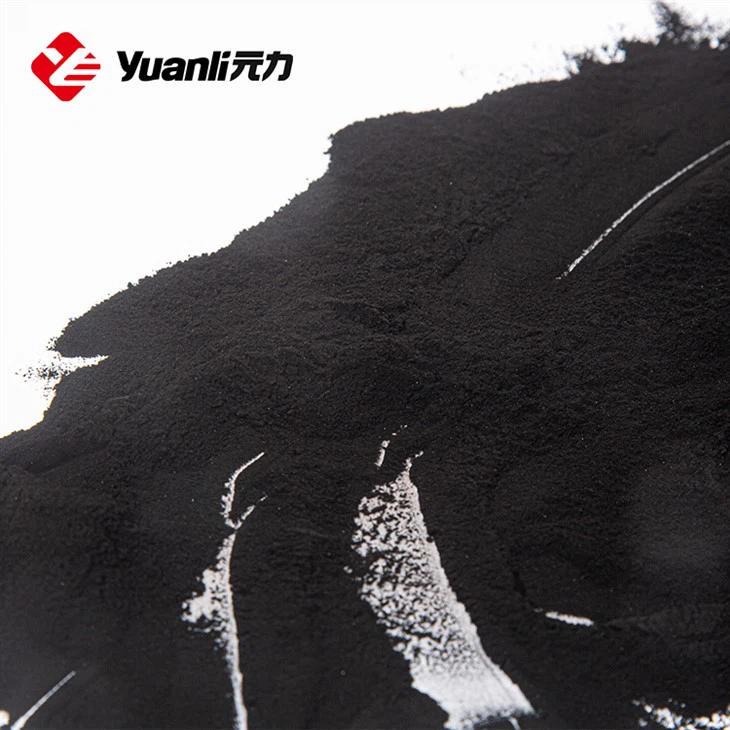

If you're interested in using activated carbon for plant desulfurization and denitrification, check out our Activated Carbon for Plants Desulfurization and Denitrification. And for those looking for a high-quality Activated Charcoal Black Powder, we've got you covered too.
Why Choose Our Fixed Activated Carbon
As a supplier, we take pride in offering high-quality Fixed Activated Carbon. We use advanced manufacturing processes to ensure that our activated carbon has the optimal pore structure and surface chemistry for maximum adsorption and catalytic activity.
Our products are also rigorously tested to meet the highest standards of quality and performance. Whether you need a small quantity for a laboratory experiment or a large amount for an industrial application, we can provide you with the right solution.
Contact Us for Purchase
If you're interested in purchasing Fixed Activated Carbon, we'd love to hear from you. We can provide you with detailed product information, samples, and competitive pricing. Just reach out to us, and our team of experts will be happy to assist you with your specific needs.
References
- "Activated Carbon: Adsorption Basics and Applications" by M. A. Anderson and C. R. Crittenden
- "Carbon Materials for Catalysis" edited by Philippe Serp and Alfons Baiker
- "Water Treatment Unit Processes: Physical and Chemical" by George Tchobanoglous, Franklin L. Burton, and H. David Stensel
Send Inquiry