



Wood‑based Powder Activated Carbon: Fast Adsorption yet Fast Saturation
Aug 27, 2026
Leave a message
I. The Essence of Powder Activated Carbon Adsorption: A Short‑term High‑intensity Reaction
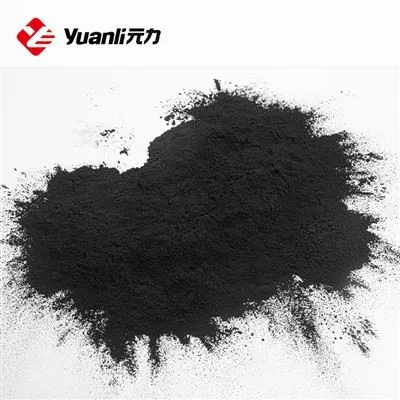
Wood‑based Powder Activated Carbon (Wood‑based PAC) is manufactured from sawdust and fruit‑shell feedstock via steam activation at 800‑1000 °C. It generally delivers a specific surface area of 800‑1200 m²/g and an iodine number of 800‑1100 mg/g. With particle fineness of 200‑325 mesh (0.04‑0.075 mm), it forms suspension once dosed into water and achieves sufficient contact with wastewater. As a mainstream material for Activated carbon for wastewater treatment, thanks to its large specific surface area, short diffusion path and low mass‑transfer resistance, 60‑70 % of total adsorption capacity can be achieved within the first 30 minutes. Once Activated Carbon Powder For water treatment approaches saturation, pre‑adsorbed organic substances start to desorb and release under high concentration gradient.
This reveals the essential characteristic of powder activated carbon: it functions as a reactor rather than a filter. The whole process, including mixing of PAC with wastewater, adsorption, sedimentation or filtration separation, is normally controlled within 2‑4 hours. Excessive retention time will not only lower treatment efficiency but also cause secondary pollution. This mechanism is completely different from the "filtration‑regeneration‑circulation" mode of granular activated carbon, and this critical difference must be considered when selecting media for Activated carbon for wastewater treatment.
II. Three Suitable Wastewater Types and Three Unsuitable Wastewater Types for PAC
The "fast‑in fast‑out" property determines that powder activated carbon is only applicable to wastewater scenarios featuring high pollutant concentration, short contact time and feasible solid‑liquid separation. In industrial practice, Activated Carbon Powder For water treatment is a rational choice for three categories of wastewater:
- Sudden high‑concentration organic wastewater: Such as ammonia‑still wastewater from coking plants and accidental spill‑polluted wastewater from pesticide factories, where COD surges above 5000 mg/L. PAC can rapidly reduce COD within 1‑2 hours as an emergency measure before subsequent biological treatment, which is irreplaceable for such emergency scenarios of Activated carbon for wastewater treatment.
- High‑color wastewater from printing‑dyeing and dye intermediate production: Dye molecules feature complex structures. Granular activated carbon contains limited mesopores and shows poor adsorption performance towards such molecules. In contrast, fine particles of PAC provide short diffusion paths, delivering 1.5‑2 times higher adsorption efficiency for macromolecular dye contaminants than granular carbon. For instance, a printing‑dyeing plant in Zhejiang applied 150 ppm wood‑based PAC, reducing chroma from 1000 times down to below 50 times and COD from 600 mg/L to 180 mg/L.
- Pharmaceutical and fine‑chemical wastewater containing refractory organics: Such wastewater usually has a B/C ratio below 0.2 with poor biodegradability. Powder activated carbon serves as pre‑treatment to relieve the load of subsequent biological processes.
Conversely, three kinds of wastewater are not suitable for PAC treatment:
- Large‑flow low‑concentration wastewater (e.g. effluent from secondary sedimentation tank of domestic sewage with COD<100 mg/L). PAC shows low adsorption efficiency here. The reagent cost can reach 0.3‑0.5 CNY per ton of water, resulting in annual chemical cost at million‑level for full‑process application.
- Oil‑bearing or emulsion‑containing wastewater: Oil films will coat PAC particles and cut adsorption efficiency by half.
- Electroplating and mine wastewater loaded with heavy‑metal ions: PAC has extremely weak adsorption capacity for metal ions and barely works for such pollutants.
Application Screening Checklist for Powder Activated Carbon
- Influent COD > 500 mg/L ✅ Optimal cost‑performance
- Contact time: 1‑2 hours ✅ Highest efficiency
- Follow‑up coagulation‑sedimentation / air‑flotation separation ✅ Complete process chain
- Influent COD < 100 mg/L ❌ Cost‑wasteful
- Oil‑bearing / emulsion‑containing wastewater ❌ Deactivation caused by oil‑film coating
- Continuous operation over 4 hours ❌ High desorption risk

III. Engineering Boundaries for PAC "Fast‑in Fast‑out" Operation
Three rigid engineering boundaries shall be followed for practical PAC application:
- Contact time: The residence time of PAC inside mixing reaction tanks shall not exceed 2 hours, with optimal range of 1‑1.5 hours. Beyond this window, desorption quantity exceeds adsorption quantity and COD rebound occurs. A chemical enterprise in Hebei once extended mixing‑tank residence time from 2 hours to 4 hours. Consequently, effluent COD turned out 15 % higher than influent COD - the treatment process produced pollution instead of removing it, a common pitfall when operating Activated Carbon Powder For water treatment.
- Separation method: Dosed PAC must be rapidly separated via coagulation sedimentation or air flotation and shall not flow into downstream treatment units together with effluent. The surface loading rate of sedimentation tanks is generally 0.8‑1.2 m³/(m²·h), with retention time of 2‑3 hours, to ensure the water content of PAC sludge is concentrated below 95 %.
- Sludge disposal: Sludge generated after PAC adsorbs organic pollutants is classified as hazardous waste. Direct discharge or simple landfilling is prohibited. Therefore, process selection for PAC treatment shall evaluate not only effluent quality but also the cost and disposal scheme of end‑of‑pipe sludge.

Powder activated carbon is not a low‑cost substitute, but a high‑efficiency tool for targeted scenarios. Only by understanding its fast‑saturation characteristics, strictly complying with contact‑time limits, and supporting it with qualified separation and sludge disposal facilities, can this material exert its full value. Blindly pursuing the "fast‑in fast‑out" logic may result in temporary clear effluent, repeated pollutant rebound and secondary pollution risks.
We have a wide range of high-quality Powder Activated Carbon. If you need this product, we can recommend the most suitable model based on your requirements. Please feel free to come and consult!
Send Inquiry