



The Unsung Power Of Adsorption: How It Shapes Our Health And Daily Life
Apr 17, 2026
Leave a message
Beneath the surface, an ongoing molecular "tug-of-war" is taking place, and the outcome of this battle may be affecting your breath and health at this very moment.
In modern life, have you noticed these phenomena? The odor-removing charcoal packs inside new shoes working silently; the small silica gel bags in medicine bottles protecting drugs from moisture; the filter elements in water purifiers continuously removing impurities from water...
These seemingly ordinary daily items all perform the same task-adsorption. Behind this superficial phenomenon lies a universal and crucial scientific principle in the material world.

I. Ubiquitous Adsorption Phenomena
Adsorption, a term that sounds professional, is actually everywhere in our lives. Adsorption occurs quietly when you wipe water stains off a table with a sponge, place an activated charcoal pack in the refrigerator to remove odors, or take medicinal charcoal to treat gastrointestinal discomfort.
Scientifically defined, adsorption is the process by which substances (mainly solids) attract and accumulate surrounding gas or liquid molecules, ions, or atoms on their surfaces.
The essence of this phenomenon lies in the different situations of surface molecules and internal molecules. Internal molecules are evenly surrounded by identical molecules and are in force balance; whereas surface molecules have no identical molecules on one side and are in an unbalanced force state.
This imbalance gives surface molecules more energy than internal molecules. Scientists call this "extra energy" surface energy. Substances reduce this surface energy by adsorbing molecules from the surrounding environment, making themselves more stable.
II. The Driving Force Behind Adsorption
Surface energy is the core concept for understanding adsorption. This seemingly abstract concept controls many phenomena in our daily lives.
Surface molecules of any material system are in a state of "energy surplus". The system naturally seeks ways to reduce its own energy, and one of the most effective methods is to attract other molecules to attach to the surface.
Experiments have proven that the finer a certain mass of substance is dispersed, the larger its surface area and the higher its surface energy. This is why powdered activated carbon has stronger adsorption capacity than block carbon-it has a larger surface area and higher surface energy.
Solid surfaces can reduce their surface tension by adsorbing gas or liquid molecules. This effect is widely used in the pharmaceutical field: for example, silica gel, alumina, and molecular sieves can remove impurities generated during drug synthesis, improving the purity and safety of drugs.
III. Adsorption Behavior on Liquid Surfaces
Adsorption is not limited to solid surfaces; wonderful stories also unfold on liquid surfaces. For instance, when an oil drop falls on water, it quickly spreads into a thin film-a typical example of adsorption on liquid surfaces.
In a pure liquid, surface tension is a fixed value. However, this balance is broken when certain solutes are added. Adding soap (higher fatty acid salt) to water is a classic case: as the amount of soap increases, the surface tension of water drops sharply.
Studies have found that solutes that can reduce the surface tension of a solution tend to accumulate on the solution surface, reducing the surface energy of the entire system and making it more stable.
This phenomenon has important applications in chemistry and biology. The decontamination principle of cleaners, the structural characteristics of cell membranes, and the emulsification technology in cosmetics all rely on an in-depth understanding of surface adsorption in solutions.
IV. The Four-Step Process of Adsorption
When a pollutant molecule is "captured" by an adsorbent, it undergoes an elaborate microscopic journey consisting of four key steps, each affecting the efficiency and speed of adsorption.
- The pollutant diffuses from the bulk solution to the water film on the adsorbent surface. Like a swimmer swimming toward the shore, the molecule moves from its solution to the vicinity of the adsorbent particles. A thin water film forms on the adsorbent surface due to hydration, which is the first interface the pollutant encounters.
- The pollutant molecule crosses the liquid film and reaches the outer surface of the adsorbent. This process requires overcoming the resistance of the liquid film, comparable to a swimmer finally climbing onto the beach.
- The pollutant diffuses from the outer surface to the inner surface of the adsorbent particles. The real adsorption sites are often hidden in the internal pores of the adsorbent particles, and the molecule needs to travel inward along the intricate pore network.
- The pollutant "Settles" on the active site and stably attaches to the adsorbent surface through physical or chemical interactions.
The first two steps are collectively called the liquid film diffusion process, and the third step is the intraparticle diffusion process. Scientists have found that the slowest diffusion step often determines the speed of the entire adsorption process, just as the slowest runner in a relay race determines the team's overall result.
V. The Silent Guardian of Health
The application of adsorption principles in the pharmaceutical field is extensive and in-depth, making it an indispensable part of modern medicine. As an outstanding adsorbent, Medicinal activated carbon plays a crucial role in this area.
In the process of pharmaceutical preparation, adsorbents such as silica gel, alumina and molecular sieves act as "purifiers" to precisely remove impurities generated during synthesis, thereby improving the purity and safety of drugs. Medicinal activated carbon is also often used as an adsorbent material in refining procedures to further enhance pharmaceutical quality. Oral Medicinal activated carbon can adsorb gases, toxins and bacteria in the intestinal tract, and is commonly used in the treatment of acute conditions such as food poisoning and drug overdose.
In the field of blood purification, adsorption technology shines brilliantly. Adsorbents used in hemoperfusion devices can specifically remove toxins from the blood of patients with renal failure, and some systems also adopt Medicinal activated carbon as the core adsorption medium, forming an important part of renal replacement therapy.
In modern medical care, adsorption dressings can absorb wound exudate while maintaining a moist environment to promote healing. Some novel drug delivery systems are also designed based on the adsorption principle, achieving controlled release and targeted delivery of drugs. Some carriers also draw on the adsorption mechanism of Medicinal activated carbon to improve the efficiency of drug delivery.
VI. The Evolution of Adsorption Materials
Human understanding and application of adsorption materials have spanned thousands of years. The ancient Egyptians already used charcoal to purify water and treat diseases, and ancient Indian documents also record the use of sand filtration and charcoal for water purification. In modern water purification technology, coconut Shell Activated Carbon for Water Treatment, with its high-efficiency adsorption properties, has become a typical application that continues this ancient wisdom.
With the advent of the Industrial Revolution, the demand for adsorption materials increased significantly. In the 19th century, bone char was widely used for decolorization in the sugar industry; at the beginning of the 20th century, large-scale production of activated carbon became possible, and it was used in gas masks during World War I to protect soldiers from toxic gases. Today, coconut shell activated carbon water treatment has become one of the mainstream solutions in industrial and municipal water purification.
In recent years, the development of adsorption materials has advanced by leaps and bounds. Activated carbon fibers have faster adsorption speed and higher adsorption capacity than traditional granular activated carbon; molecular sieves can selectively adsorb based on molecular size and shape; mesoporous materials have adjustable pore sizes and extremely high specific surface areas; metal-organic frameworks (MOFs) represent the cutting edge of adsorption materials, with a surface area up to ten times that of traditional activated carbon. In the water treatment sector, coconut shell activated carbon water treatment always occupies an important position due to its high hardness, high adsorption value, and long service life.
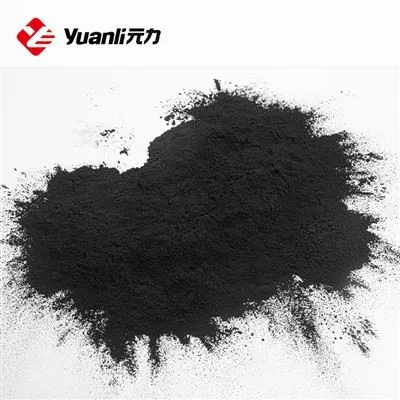
These advanced materials are playing an increasingly important role in environmental remediation, energy storage, medical health, and other fields. Especially in scenarios such as advanced drinking water treatment, sewage treatment and reuse, coconut shell activated carbon water treatment can effectively remove residual chlorine, color, odor and trace organic compounds, significantly improving water quality and safety.
Despite the remarkable progress in adsorption science, many challenges remain. How to design adsorbent materials with higher selectivity? How to achieve efficient regeneration and recycling of adsorbents? How to reduce the cost and energy consumption of adsorption technology? Technologies for the regeneration and recycling of adsorbents used in coconut shell activated carbon water treatment are also becoming key research directions in the industry.
In the future, adsorption science will develop in several important directions:
- Intelligent adsorption materials will automatically adjust adsorption performance according to environmental changes;
- Biomimetic adsorption materials will imitate the efficient adsorption mechanisms of biological systems;
- Multifunctional integrated adsorption systems will simultaneously achieve adsorption, catalysis, sensing, and other functions.
Conclusion
With the development of nanotechnology and materials science, we have reason to believe that adsorption technology will play an even more critical role in solving global challenges such as energy crises, environmental pollution, and healthcare.
From the ancient Egyptians using charcoal to purify water, to modern artificial kidneys in hemodialysis removing toxins via adsorption, and to the intelligent adsorption materials that may emerge in the future, this ancient and fundamental science is constantly evolving and continuously impacting human health and daily life.
In the pore structure of activated carbon, the specific surface area of one gram of high-quality activated carbon can reach more than 3,000 square meters-equivalent to the size of a standard basketball court. It is this huge microscopic surface that endows it with excellent adsorption capacity.
From the weak interactions between microscopic molecules to the cleanliness and health of the macroscopic world, the bridge of adsorption science silently connects basic principles with practical applications, creating a healthier and more sustainable future for humanity. We also believe that activated carbon, as the main force of adsorption, will play an increasingly significant role.

Our company offers a wide range of activated carbon products, and we are confident that we have the type you need. Feel free to consult us if you are interested!
Send Inquiry