



Roles of Activated Carbon in Organic Synthesis
Nov 07, 2026
Leave a message
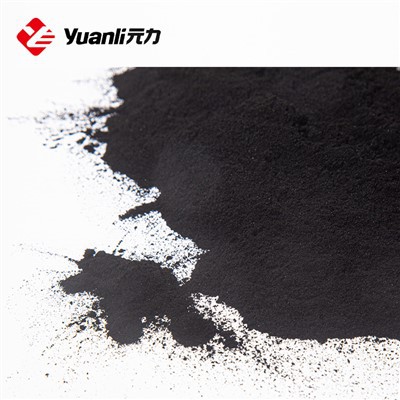
Activated carbon is one of the commonly‑used materials in organic‑synthesis experiments, mainly applied for decolorization and impurity removal of compounds. According to basic chemistry laboratory manuals, the standard application of activated carbon is hot‑filtration decolorization prior to recrystallization. In fact, activated carbon has other usages. Skillful utilization of its properties with full awareness of its advantages and drawbacks can bring great convenience to organic‑synthesis experiments, and Activated carbon decoloration remains its most widely adopted function in lab purification workflows.
Activated carbon functions in organic synthesis mainly through decolorization, adsorption and filter‑aid effect. In a single operating cycle, one effect usually dominates while the others play secondary roles. For high‑purity chemical products, High Purification Activated Carbon is often preferred to reduce extra impurities introduced during treatment.

Ⅰ. Decolorization
As its most frequent application, activated carbon can be regarded as a non‑polar substance from polarity‑analysis perspective. It adsorbs non‑polar and weakly‑polar pigments and works best in high‑polarity solvents. Most pigments contained in substances fall into non‑polar or weakly‑polar categories. Therefore, activated carbon is the most widely‑used decolorizing agent, with water and alcohols being the typical solvents. For decolorization tasks, pigment polarity generally does not need to be pre‑evaluated. Activated carbon can be added directly, and decolorization performance is judged by visual comparison of solution color before and after treatment. Many laboratories standardize the operating parameters for Activated carbon decoloration to stabilize product quality.
General operating procedure:
- Dissolve the target substance in a certain amount of solvent under heating until complete dissolution.
- Add an appropriate dosage of activated carbon and keep stirring for a period of time.
- Perform hot filtration, then concentrate the filtrate.
The substance to be decolorized can be solid or liquid with visible pigments, mostly solids.
- Solvent dosage: usually 3‑10 times the mass of solute. Too‑little solvent causes high loss during hot filtration; excessive solvent raises unnecessary costs.
- Preferred solvents: high‑polarity solvents such as methanol, ethanol and water. Select the optimal solvent if recrystallization is required after decolorization.
- Activated‑carbon dosage: generally 5‑10 % by mass of solute, adjustable according to practical conditions. When using High Purification Activated Carbon, the dosage can be appropriately reduced thanks to its stable low impurity content.
- Stirring duration: 30 minutes to 2 hours, adjustable as needed.
- Post‑filtration treatment: repeat decolorization with extra activated carbon if color shows little improvement. For recrystallization, cool directly or concentrate moderately before cooling for crystallization. For liquid samples, concentrate to dryness.

Ⅱ. Impurity Removal
Impurities discussed here mainly refer to insoluble substances including inorganic salts, dust and physical contaminants. Decolorization by activated carbon is also a type of impurity removal, targeting organic visible‑light‑absorbing impurities.
The impurity‑removal workflow is similar to decolorization: dissolve the sample completely, add activated carbon, stir and filter, then concentrate. Pure impurity removal can be achieved by dissolution‑filtration without activated carbon. Adding activated carbon takes advantage of its filter‑aid property to improve filtration performance.
Ⅲ. Adsorption
Adsorption mainly targets tar and viscous impurities. Without activated carbon, these substances will readily block filter media during filtration. Activated carbon delivers prominent performance for capturing such contaminants. For adsorption‑oriented applications, silica gel or diatomaceous earth can serve as alternatives with little functional difference.
In practical operation, activated carbon often exerts decolorization, impurity‑removal and adsorption simultaneously. Colored impurities enter the inner pore structure of activated‑carbon particles, while tar and viscous impurities are retained between carbon granules. Meanwhile, activated carbon acts as filter aid for insoluble‑substance filtration. These three functions cannot be completely isolated from each other.
Although the principles of activated‑carbon application in organic synthesis are straightforward, various practical troubles frequently occur:
- Poor decolorization performance; filtrate remains dark even after repeated decolorization cycles.
- Severe product loss during decolorization (loss exceeding 10 % per batch).
- Activated‑carbon fines penetrate filter paper / filter cloth, introducing carbon residues into final products.
- Extremely slow filtration and frequent clogging of filter paper or filter cloth after carbon addition.
- Heavy fouling of reaction kettles after carbon usage, which are difficult to clean thoroughly.
Root‑cause analysis for common issues:
- Poor decolorization effect: related to pigment polarity; no single decolorizer fits all pigment species.
- High product loss: excessive adsorption of target product onto activated‑carbon surface.
- Carbon penetration through filter media: improper grade selection of activated carbon.
- Filter clogging: improper carbon grade plus particle‑size distribution of insoluble impurities.
- Difficult‑to‑clean reaction kettles: inherent material properties of activated carbon.

The above description only covers the general functions of activated carbon. In reality, depending on different application environments, each type of activated carbon mainly performs different functions. If you want to know more about the detailed application scenarios of activated carbon, please feel free to come for consultation. We will match the most suitable activated carbon type for you.
Send Inquiry